
Latest from Donovan:
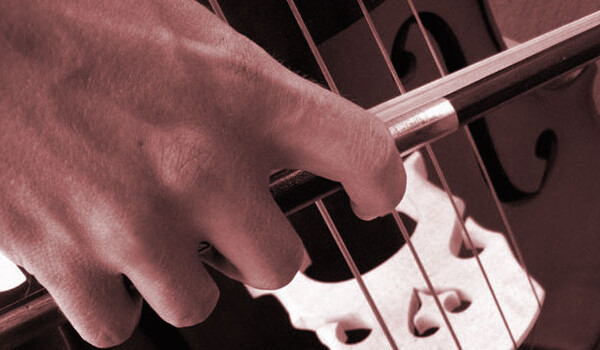
How to Practice Double Stops (with the Bow)
Double stops can present a major challenge for double bassists just being introduced to them, specifically in the arena of intonation. Finger spacing, shifting, and dropping and lifting of multiple fingers are all areas that can trip someone up. Below, using a famous passage from Edouard Nanny’s Concerto attributed to Dragonetti, are a few ways to approach double stops which...

Moving from Upright to Electric Bass
If you are an electric bassist looking to learn upright, getting your double bass skills up to snuff can be daunting. When deciding to become a “switcher,” most of us coming from the electric bass side of things approach the new, bigger instrument with some amount of trepidation. The usual feeling seems to be that while it’s by no means...
Finger Substitutions
When we play the same note, usually on the same string, consecutively, but with different fingers, it is called a finger substitution. For example: This technique is most often employed is when we want to avoid shifting within a slur. While we should be able to shift silently within a slur, it is sometimes musically more appealing, or simply cleaner,...

Dealing with Blisters on the Pizzicato Hand
So, you recently acquired a double bass. This is great news! Welcome! Or perhaps you simply resolved that this was the year you got serious about playing and you increased your time at the instrument. Fantastic! Or maybe you picked up some regular gigs! Even better! Either way, this recent positive change in your life will allow you the opportunity...

Exercises: Thumb Position in the Lower Positions
When many of us first learn to play in “thumb position” (using thumb on top of the fingerboard to press the string down) we begin by placing thumb on the half-string harmonic (G on the G-string, 12th fret, if we had frets). In fact, much beginning thumb position study starts here. From here, intermediate thumb position study often focuses on...
Scale Exercise in Thumb Position
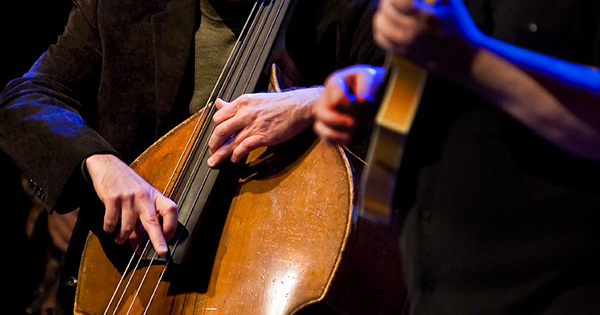
When double bassists put their thumb on top of the fingerboard, rather than behind it, and use it to depress the string (just like the other fingers), we call that “thumb position.” There are a plethora of etude books and exercises to help us solidify the use of the thumb to press the string, but I’ve found a few particularly...

Starting Out: Getting Work
Photo by Alan Levine Q: I recently saw a video that talked about going to music school. After watching it I got the impression that maybe school wasn’t such a good idea. At the same time it seemed like the only way to get work as a musician, was to go to school and use that school’s alumni network to...
Dealing with a Removable Neck
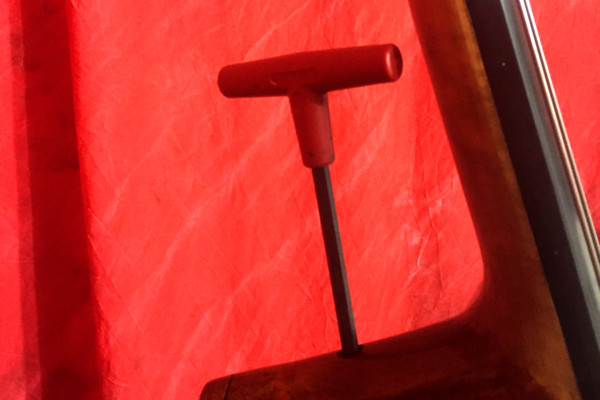
Q: I have read your latest column on the set-up of your bass and that you had a removable neck installed. I never had one and one of the reasons why I’m holding off on this is the fact that a removable neck also means a removable bridge. I mean: the bridge is not fixed on the bass, which is...
Surviving the Holidays as a Freelance Bassist
For non-musicians the winter holidays can be a time for rest, relaxation and extra time with family. For many freelance musicians, however, it is a time of early mornings, late nights, long hours playing, coffee, and lots of time in the car going from gig to gig. The upside is, of course, that it can be our most profitable time...
My Double Bass Setup: Part 4 – Endpin, Removable Neck and Travel Case
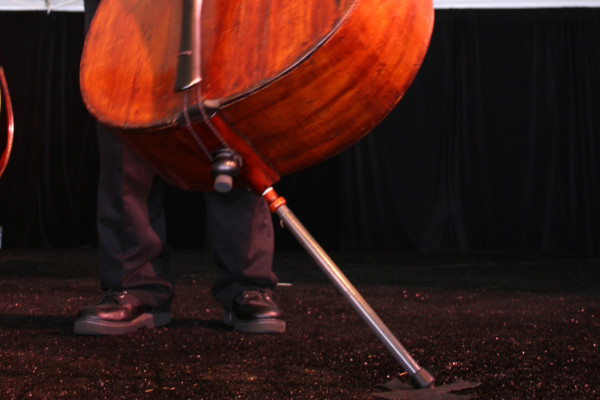
Endpin I also use an angled endpin while standing. The main reason for this is to take the weight of the instrument off my left hand while allowing my left hand easy access to the complete fingerboard. For more on this, check out this column. Some people have noted that my endpin length and angle seem to have changed over...

My Double Bass Setup: Part 3 – String Spacing and String Height
String Spacing My string spacing at the nut is approximately 8 millimeters between each string and my string spacing at the bridge is about 22 millimeters between each string. By contrast a more traditional setup might be 10 mm at the nut and 28 mm at the bridge. Although this particular change may seem small (8 vs. 10 and 22...
My Double Bass Setup: Part 2 – Number of Strings, Tuning and Fingerboard Length
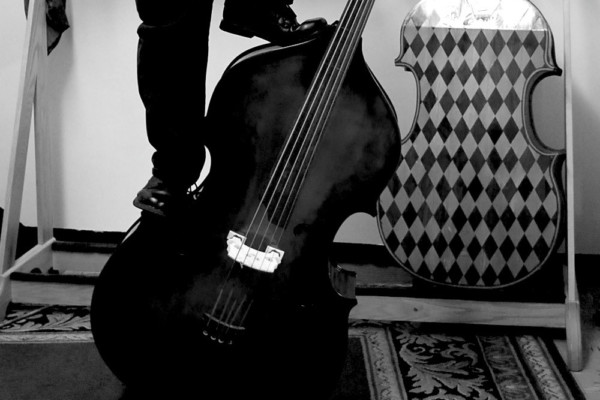
I play a five-string bass with both a higher string and a low C, via an extension. My specific tuning is (from lowest to highest) C, B, E, A, D. The low C string can be tuned via capos (on the C extension) to any chromatic note between C and E (the more standard low string on a double bass)....