Wonder Women: How June Rotenberg Broke Barriers in Jazz and Classical Bass
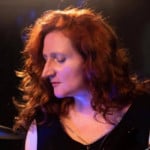

“…And to be treated as an equal, you better be very good…If you go on a recording date now, you better be excellent. I do a lot of that work, and I can tell you, it’s nice to get the residual checks, but it’s also a murderous thing to go in there and be the only girl on the date.”
– June Rotenberg, when interviewed about her session work in American Women in Jazz
It is said that we stand on the shoulders of those who came before us. One of the purposes of this series is to amplify the stories of bassists who were trailblazers; to archive them for others to consider as they forge their own paths. The early female bassists of the 1940s are among the trailblazers; the shoulders that today’s bassists stand on. However, many of their names are unknown, despite their accomplishments.
Bassist June Rotenberg had a dual career as a jazz and classical bassist. She played with a long roster of jazz greats, including Art Tatum, Ben Webster, and Lester Young. She was a jazz trailblazer by playing double bass in two all-girl trios in the 1940s. She traveled and performed in a variety of projects…the Casals Festival in Europe, a USO tour, the Saint Louis Symphony, and in the pits of Broadway productions. To achieve even one of these things in the 1940s was remarkable. But in spite of her accomplishments, June Rotenberg and many other remarkable female musicians from the 40s remain largely unknown.
Overcoming Barriers: Women and the Bass in the 1940s
These were times when women were actively discouraged from playing bass. By June’s own account…her teacher…a member of the Philadelphia Orchestra, was not encouraging. She related, “He was not about to see any women being bass players. And he was not encouraging. None of them were, actually. And there weren’t too many women around.” For further historical context, check out Inez Wyrick’s Wonder Women feature, Jane Little’s feature, or an archived 1966 article from Time magazine detailing the work culture female orchestral musicians encountered.
June was born around 1926 in Philadelphia, Pennsylvania, a city that has a particularly deep bench when it comes to bassists. She was interested in music, so lessons were in order. She began lessons when she was thirteen years old; her father paid for piano lessons. However, she pretended she was taking piano lessons while she was actually taking double bass lessons. A year passed before the truth was discovered, and June had gained enough skill as a bassist that it merited continuing. June related, “And then, when I wanted to be a bass player, my sister, who was a fine pianist, was very encouraging. She was teaching, and she paid for my bass lessons for about a year.”
 June was initially trained as a classical bassist, but necessity drew her into her career as a jazz player. When she graduated from high school, she headed up to New York City. She relates the story “…(I) took an audition to get a scholarship here with the National Orchestral Association from the Philharmonic…I started playing jazz…because I needed to make a living while I was a student. But I became very interested, certainly, and I got to know many of the fine jazz players and I spent a lot of time on 52nd street sitting in and all that stuff.”
She met and sat in with many jazz musicians, including Ben Webster (Duke Ellington band) and Lester Young. “It was a good beginning. It was nice to have been among the first, too, because there weren’t that many girl bass players around. I just wanted to play and hear good stuff, and there was good stuff all around. It was a very creative time. It was better than any ear-training class or any counterpoint class or anything I ever took. And actually, I think you need that. Most of the kids don’t have a chance to do that today, just go out and play.”
Collaborating with Mary Lou Williams and Beryl Booker
By the mid-40s, June had recorded with several groundbreaking all‐female trios led by Mary Lou Williams and Beryl Booker. Ben Webster and Mary Lou Williams were living at the Hotel Cecil at that time. Mary Lou Williams was a groundbreaking jazz pianist, composer, and arranger. Williams’ work influenced jazz’s bop movement, and she mentored legends like Thelonious Monk and Dizzy Gillespie.
Rotenberg recalls meeting Mary Lou Williams, “She was writing an arrangement for Benny Goodman – you know, on the bed, in this tiny room up there at the Hotel Cecil. Imagine a woman doing an orchestral arrangement! It was marvelous! She really was a first in everything. Then we began to work together. We worked a couple of little jobs. Bridget O’Flynn and Mary Lou and I played together – just a week here, a week there. Times weren’t good. It was very difficult for girls. We began to play some of the jazz concerts. They had jazz concerts in Carnegie Hall, and I think we did two of them.”
Rotenberg’s assertive bass playing drives William’s trio in recordings of “Hestitation Boogie” and “Boogie Mysterioso”. Mary Osborne plays guitar on this recording with Margie Hyams on vibes and Rose Gottesman on drums.
Mary Lou Williams arranged Dvořák’s “Humoresque” into a vibrant jazz piece with June’s bass playing anchoring and swinging the arrangement. Bridget O’Flynn rounds out the lineup on drums. “Humoresque” was released in 1946 on RCA Victor, with “Waltz Boogie” on the B side.
Rotenberg also played in another trio with guitarist Mary Osborne. This trio was lead by another Philadelphia native; bandleader and swing pianist Beryl Booker. They recorded and released three songs with RCA Victor in 1947. One of the songs, titled “Low Ceiling”, became very popular.
June shared, “The big experience was the recordings, because it was a chance for women to make music sort of on an equal basis with men.” The recordings were extremely popular. The Girl Stars In Jazz, released in 1948, sold out. The album was a collection of recordings from various groups, including the William and Booker trios. Rotenberg continues, “They just had two printings and they didn’t print any more. And I never understood that, because it sold very well. I can’t even get one. I don’t even have one.” Despite the commercial success of these groups, the trios did not continue to work together.

Mary Osborne (guitar) Marjorie Hyames (vibraphone) Mary Lou Williams (piano) June Rotenberg (bass) Rose Gottesman (drums)
Rotenberg’s varied skill set on the upright kept her busy. She spent six months of the year playing with the Saint Louis Symphony. When back in New York, she was sitting in with Art Tatum five or six nights a week and then going to jam sessions. But by 1950 she headed to Europe and played the Casals festivals in the summer and sat in at clubs when she found the time around her festival commitments. She found the European jazz scene to be more welcoming than the American scene, simply because she had the experience and knowledge learned by jamming with legendary jazz musicians earlier in her career. When interviewed, it appears the schedule at Casals was focused on product; “We did one hundred recordings for Columbia there. Every morning we started eight thirty to rehearse, and by ten we were recording. And I did three of those festivals with Casals.”
After she came back from the first Casals Festival, she spent two more summers working in the Saint Louis Symphony. She relates, “…I didn’t want to go there anymore either. I came back to New York and stayed here. And I’m not sorry. I should have stayed here from the beginning. But imagine a girl seventeen getting into a major orchestra on bass. It was a big thing. And I was very happy. I loved playing with symphony orchestras. That’s the thing I like best, really. But that’s really the feeling of jazz- if you have a good ensemble, good chamber music, that’s what it is.”
As for her later career? “After the jazz thing kind of died, and before I got into the Broadway shows, I was doing club dates for a while too, and you know, it’s demeaning. I made more money than I ever made in my life then, but it’s just so ridiculous, so I gave the whole thing up. I would like to play with people that I would choose to play with. I don’t want to just play with a piano player, either, although that’s a marvelous thing for a bass player. You play a lot of solos and stuff. I don’t think that’s my style….I’d rather play an opera at the Met.”
Why June Rotenberg’s Bass Legacy Still Matters Today
June Rotenberg’s story is more than a historical footnote—it is a powerful reminder of how many pioneering musicians have quietly shaped the course of jazz and classical music while navigating a system that often failed to recognize their contributions. She didn’t seek to be a symbol—she simply wanted to play. And in doing so, she broke barriers without fanfare, showing that mastery, resilience, and community matter more than gender. Her path—paved through jam sessions on 52nd Street, Broadway pits, symphony halls, smoky clubs, and recording sessions—is a blueprint of grit and grace.
“My greatest concern was not to be playing with women only—but just to be playing. Why should there be a distinction made to begin with? When I wanted to play jazz, I went to play with Dizzy Gillespie and those guys. They’re all good friends and they accepted me.” – June Rotenberg, in a 1978 interview with the New York Times, on performing with the all-female Williams and Booker trios in the 1940’s.
Like many of her peers, she played not for attention, but because she had something to say musically. Her story is one of skill, stamina, and straight-up hustle. She was recording, jamming, and traveling the world at a time when women were told to stay out of the rhythm section altogether. But what makes Rotenberg’s legacy so powerful is how familiar it feels to working bassists: the long hours, the hustle, the pressure to prove yourself, the love of a good ensemble. So here’s to June—and to every bassist who’s had to push a little harder to be heard. May we keep telling their stories, playing with the same fire, and making space for the next wave of low-end trailblazers.
Sources:
Quotes from June Rotenberg (unless otherwise indicated) from American Women in Jazz, by Sally Placksin
Brittany Frompovich is a highly regarded educator, clinician, blogger, and bassist who currently resides in the Washington DC/NOVA region. For more content from Brittany, check out her blog, her YouTube channel, and her Bandcamp site. She also offers handmade unisex music-themed jewelry through her Etsy store. Get a Wonder Woman Tee!
