Wonder Women: Vivien Garry’s Journey as a Trailblazing Jazz Bassist
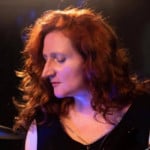
It’s 1945… the jazz mecca of 52nd Street in Manhattan is buzzing with energy and exploration. Dizzy Gillespie and Charlie Parker are in one club, Billie Holiday is across the street; the street is alive with jazz. Miles Davis is attending music school and jamming at night; so much so his schoolwork is starting to slip…but bebop is being born. Three Deuces, the Spotlite, Onyx, Kelly’s Stable…the clubs on 52nd are alive with music 24 hours a day. And right in the thick of it is bassist Vivien Garry.

Little is known about one of the first notable female jazz bassists; however, she left behind an impressive discography. I compiled a timeline from the few sources I could find. Note that her name appears in various spellings. You may see Vivien Garry, Vivian Garry, and Vivian Gary. Some of this variation is explained by the story of how she learned to play bass.
Born in 1920, Mildred Vivien Craven was a singer who was taught double bass by her husband, the talented guitarist Arvin Garrison. (Arvin would later record with Dizzy Gillespie, Charlie Parker, and Howard McGhee.) She related the story to Bob Dietsche in Toledo Magazine in 1989.
She recalled, “I was so crazy about Arv when I first met him that I used to follow him around to all of his rehearsals. I noticed that his bass player was having trouble getting the chords right, and I said to myself, ‘Hell, I can do better than that’, so I went out and bought a bass from a guy who informed me that ladies did not play the bass fiddle. I took it home and put it in the middle of the front room. When Arv came over that night, I said, ‘Teach me to play this, and we’ll become famous.’ I learned fast, so in a few weeks I was already better than Arv’s regular bass player. We picked up Bill Cummerow and called ourselves the Vivian Garry Trio, combining my name with Arv’s. I contacted an agent, and we were off and running.”
By 1945, the trio (now with Teddy Kaye on piano) was a fixture on NYC’s 52nd Street; they landed a nine-month contract securing a residency at Kelly’s Stable. Jazz legends like Art Tatum, Duke Ellington, and Ella Fitzgerald would come and catch their show, and the word spread. The group also appeared on Art Ford’s nationally known “Saturday Night Swing Session” radio show.
“Altitude” features the Garry/Garrsion/Kaye lineup and was recorded at Decca Studios in New York City circa 1945.
The book, New York City Jazz, offered more details. The group “played all over Manhattan’s top jazz nightclubs in the 1940s…this was the beginning of women gaining attention as musicians in the genre of jazz…no one had ever heard of a female bass player before. (Vivien) was one of the most well-liked musicians and worked with all the big names.” By 1947 “..she was the bandleader of the Vivien Garry Quintet, with Edna Williams on trumpet and Ginger Smock on violin, and also the Vivien Garry Trio, with her husband, Arv Garrison, on guitar and Wini Beatty on piano.”
Vintage Guitar has a feature on Garrison’s impressive guitar playing, which provides further insight into Vivien’s story as well. Wolf Marshall wrote “The couple moved to Los Angeles to join the burgeoning West Coast jazz scene and, in December ’45, recorded for the Sarco label, producing six tracks as a quartet with George Handy (piano/arranger) and Roy Hall (drums), a unit that looked to the future of small jazz combos…the trio was reconstituted with pianist Wini Beatty then worked on Central Avenue (L.A.’s equivalent of 52nd Street) bringing the cachet of a young jazz trio with two females.”
Vivien recounts the story of how the trio came to have two female players. The band was opening at the Susie Q; “Teddy Kaye informed me that he wanted to go back to New York to be with his friend. I was furious. There we were, all ready to open, and no piano player. Then somebody told me about Wini Beatty, who had been playing with Frankie Laine and Slim Gaillard. I wasn’t sure how two girls would work out, but the audience loved us, and we were held over for a whole month.”
“Hopscotch”, recorded in Los Angeles and released by the Sarco label in 1956, highlights Garry’s driving bass and Garrison’s rapid-fire guitar lines.
Unfortunately, Garrison started having health issues in California that would prematurely end his career. Wolf Marshall wrote, “Just 25 years old at the time, Garrison began to suffer seizures thought to be stress-induced epilepsy related to a childhood head injury. The episodes affected performances, foreshadowing a rapid decline.”
The seizures worsened after the couple moved back to New York. Marshall adds more context: “When Beatty left the trio, the couple reunited with Kaye and returned to New York in ’47, where they played radio shows, appeared at Royal Roost’s Bop Concert, and participated in an All-Star Jam that included Lionel Hampton and Gonzales. Arv also recorded as a leader with Garry and pianist El Myers in 1948, producing six songs that would be his last official studio dates. Garrison’s five to six daily blackouts prompted Myers to leave in the fall of ’48. Garry abandoned him shortly afterward to tend to her sick father and never returned. Arv eventually returned to Toledo to be cared for by his mother, and played until ‘57.” Arv tragically died from drowning on July 30th 1960, from a seizure he had while swimming.
“A Women’s Place Is In The Groove”
Girls in Jazz featuring America’s Greatest Feminine Jazz Musicians, was released by RCA Victor and included two contributions from The Vivien Garry Quintet: “A Woman’s Place Is In The Groove” and “Body And Soul”. The lineup now consisted of Ginger Smock on violin, Edna Williams on trumpet, Wini Beatty on piano, and Dody Jeshke on drums. The other all-female jazz combos on the album set included Mary Lou Williams’ Girl Stars, Mary Lou Williams Trio, The Sweethearts of Rhythm, and the Beryl Booker Trio.
Vivien’s timeline as a working musician continues into the mid-1950s with a discography to back that activity, but far fewer autobiographical details. Vivien remarried twice – first to trombonist Dick Taylor. Vivien was on several recording sessions for Scherman’s Skylark label, where the instrumental backing was by Dick Taylor and His Taylor Made Music. She both organized and joined several groups, and it appears she was actively gigging on the West Coast until the mid-50s. She later married American jazz clarinetist, saxophonist, and composer James Peter Giuffre. In 1997, she released an autobiography called The Blues in B Flat. She died on December 1, 2008, a few months after James Guiffre’s passing.
Every generation of musicians builds on those who came before, learning from the previous generation’s courage, grit, hustle, and their unique groove. Vivien Garry’s story is not as widely remembered as the male giants she worked alongside, but without her and others like her, the groove for today’s female bassists might never have found its pocket. She was one of the first women to lead jazz groups under her own name, to record prolifically, and hold down the bass chair in the very heart of bebop. Vivien Garry showed us that a woman’s place is…and always has been… in the groove.
Brittany Frompovich is a highly regarded educator, clinician, blogger, and bassist who currently resides in the Washington DC/NOVA region. For more content from Brittany, check out her blog, her YouTube channel, and her Bandcamp site. She also offers handmade unisex music-themed jewelry through her Etsy store. Get a Wonder Woman Tee!


