Wonder Women: The Jazz Bass Legacy of Bonnie Wetzel
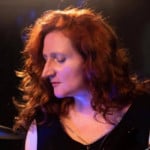
“I studied violin for 16 years, and wound up playing bass, which I still haven’t gotten around to studying.”
Bonnie Wetzel, Down Beat, September 1952

It’s 1954. The 52nd Street scene in New York City is past its peak; major clubs have closed or changed formats. Vivian Garry was now threading bebop changes into the night in Los Angeles. June Rotenberg has spent years commuting between St. Louis, New York, and Europe and is about to settle fully into the NYC scene, playing club dates and Broadway shows. A continent away, in Paris, rain freckles the cobblestones outside a club. That night, the bill reads “Jazz Club USA”; Billie Holiday up top, the Beryl Booker Trio is warming up the room. Booker flashes a grin; drummer Elaine Leighton counts off, and bassist Bonnie Wetzel folds herself around the bass, as if it were both anchor and sail.
Bonnie Wetzel (born Bonnie Jean Addleman, Vancouver, Washington) grew up with a violin under her chin. Sources disagree on the exact birth date. So far, in putting this story together, I’ve seen April, May 15, May 26, and even May 4. So the year 1926 is the firm point for now. Her parents, William Clair Addleman and Gae Nancy Dixon, were capable non-professional musicians (playing the violin and cello), and their daughter absorbed music early, playing in the Portland Junior Symphony.
In 1944, during her senior year of high school, she made the practical choice that so many bass stories have begun with…she switched to double bass because the band needed one. Classmate Norma Carson…later a jazz trumpeter…was in that program too.
By the mid-1940s, both Wetzel and Carson were out of Vancouver and on the road with Ada Leonard’s All-American Girl Orchestra, a break that meant real miles and real pressure. It was common to experience one-nighters strung across states, with the band working stints that alternated between USO camp tours and dance halls. Ada’s band delivered a savvy mix: top-notch playing wrapped in a wholesome, glamorous, “all-American” image. There were mad dashes that had the band rolling in minutes before downbeat…then scrubbing road-face into stage-face so they looked “fresh as a daisy” while playing hard.
After two years in Ada’s band, Bonnie joined a trio led by the original Ina Ray Hutton guitarist, Marian Grange. She also met jazz trumpeter Ray Wetzel, who had played with Woody Herman (from 1943–45), Stan Kenton (1945-48 and briefly in 1951), and Charlie Barnet (1949). With Barnet, Ray had played trumpet alongside greats like Maynard Ferguson, Doc Severinsen, and Rolf Ericson. After leaving Stan Kenton’s group, Ray formed his own combo. The young couple married in Ray’s hometown of Parkersburg, West Virginia on Sept. 17, 1949. (source – World Radio History)
After the wedding, they moved to New York and joined the musicians’ union to get work. Bonnie recalled, “I was pretty lucky. I didn’t even own a bass when I started here, but wound up getting gigs with some girls out on Staten Island and in Jersey; even played some jobs on the violin.”
 In 1950, Ray went on the road with the Tommy Dorsey Orchestra, which is a hard situation for two newly married, working and traveling musicians. “Tommy agreed to send for Bonnie to join the band. For the first time, Bonnie and Ray were working the same job.” Tragically, this fortuitous arrangement was short-lived. On August 17th, 1951, Charlie Shavers’ car sidewiped a truck and crashed into a bridge near Sedgwick, Colorado. Ray…only 27 years old…died en route to the hospital. Bonne was suddenly a widow at the age of 25. “After the funeral in Ray’s hometown, she returned to New York and to freelancing. The union insurance had been eaten up in expenses, and it became a matter of urgency to go back to work.”
She left the Dorsey band, returned to New York and worked with players like Roy Eldridge, Charlie Shavers, and Herb Ellis. In 1952, a year after the crash, Bonnie had a sizeable feature in Down Beat magazine. Wetzel shared, “Roy was the first one to offer me a job, but then he went right out of town on the JATP tour. But I started doing a few gigs, worked a few weeks with Red Rodney’s little group, then went with Roy.” Bonnie says she’s still a little awed at being able to work in modern jazz groups. It started accidentally when a bass player failed to show for a Saturday afternoon session with Stan Getz in the Bronx. Her ambition now is to stay in the business, preferably with a girl jazz trio flexible enough to play any kind of job. She wants to use Lorraine Walsh, a fine pianist who has been jobbing with Miles Davis, and her old friend Norma Carson on trumpet. One of her biggest kicks to date was a jazz concert she played in Philadelphia with Charlie Parker. “I was suffering with my calluses, I had a blister that was bleeding, the piano was out of tune, and everything went wrong, but I had a ball anyway!”
She worked with another former Dorsey alum in the Soft Winds trio. “Guitarist Herb Ellis, bassist John Frigo, and pianist Lou Carter formed the postwar rhythm section in the Jimmy Dorsey Orchestra. When Dorsey furloughed the band in 1947, they set out on their own as the John Carlis Trio.” The trio played the Darbury Room in Boston, and then in 1952 they headed to NYC… “John Frigo headed back for his hometown of Chicago, and Bonnie Wetzel took over the bass chair. Herb Ellis also left to join the Oscar Peterson Trio. Wetzel and Lou Carter carried on as a duo, and in January 1953 they were back at the Darbury Room (in Boston) until late spring.”

She did, in fact, land a gig with an all-girl trio. In 1953, somewhere between the Soft Winds dates and freelance work, she joined pianist Beryl Booker and drummer Elaine Leighton. The Beryl Booker Trio toured Europe in 1953-54 with the Jazz Club USA package. They performed alongside, toured with, and even accompanied Billie Holiday.
In 1954, Bonnie was among the musicians featured on MGM’s release “Cats vs. Chicks: A Jazz Battle of the Sexes”, playing “The Man I Love” and “Cat Meets Chick”. The lineup of musicians included Terry Pollard, Beryl Booker, Norma Carson, Mary Osborne, Corky Hale, Elaine Leighton, and Bonnie Wetzel.
Here’s “The Man I Love” with some tasteful bass solos from Bonnie –
Cat Meets Chick is a more uptempo track from that same album;
The Booker group toured Europe and recorded (sometimes under its members’ names) for the Discovery label. They also recorded with tenor saxophonist Don Byas.
By the mid-1950s, the Beryl Booker Trio had disbanded. Bonnie returned to the U.S. and again worked as a freelance bassist in and around New York. She and Lou Carter reunited; “Wetzel and Carter had one more go at it, starting in March 1955, when they again worked as the Soft Winds at the Darbury Room. As best I can tell, the name “Soft Winds” was retired after that.”
Like many pioneering women bassists of this era, the public trail for Bonnie Wetzel goes quiet after the mid-1950s. She died too young on February 12, 1965, at 38 years old. Several sources say she suffered from cancer before her death. When I found what I suspected was her obituary, I was puzzled to see Bonnie Jean Wetzel Carroll…another clue that there were personal milestones that happened out of the spotlight.
In 1962, Down Beat ran a piece on Racial Prejudice in Jazz, which prompted an avalanche of letters, much like a polarizing social media post could today. Though the typed and mailed responses of that era often carried more reflection than reaction. One letter, sent in from Vancouver Washington by Bonnie Wetzel Carroll, offers a final, resonant glimpse. Here’s an excerpt:
“I no longer express myself in loud noises and frustrated tears when speaking of what I believe. By quietly saying what I think, I leave my listeners not in anger but in thought. I will also teach my two young sons the beauty and wonder of the differences and the sameness of all people. Ignorance and fear are terrible and have no place in any life.”
Because so much of Bonnie Wetzel’s work lived onstage, what survives is precious. This discography maps what I can verify today; if you have posters, news clippings, or photos of Bonnie, please reach out; history gets better when we build it together.
Bonnie Wetzel Discography:
- 1953–54 — Beryl Booker Trio — Discovery DL 3021 (10″) — Bonnie Wetzel (b), Elaine Leighton (d), Beryl Booker (p, v).
- Feb 1954, Paris — Beryl Booker Trio with Don Byas — Discovery DL 3022 (10″) — Don Byas (ts), Bonnie Wetzel (b), Elaine Leighton (d), Beryl Booker (p, v). MusicBrainz+1
- June 2, 1954, NYC — Leonard Feather Presents: Cats vs. Chicks — MGM E-255 (10″), later E-3614 (12″) — Bonnie Wetzel (b) on the “Chicks” tracks (“Cat Meets Chick,” “The Man I Love,” “Anything You Can Do”), with Terry Pollard (vib), Beryl Booker (p), Norma Carson (tp), Mary Osborne (g), Corky Hale (harp), Elaine Leighton (d)
Brittany Frompovich is a highly regarded educator, clinician, blogger, and bassist who currently resides in the Washington DC/NOVA region. For more content from Brittany, check out her blog, her YouTube channel, and her Bandcamp site. She also offers handmade unisex music-themed jewelry through her Etsy store. Get a Wonder Woman Tee!


