The Jazz Thug: Giulio Xavier Cetto Shows Radical Resilience When Life Throws the Kitchen Sink
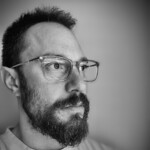
In January 2022, Giulio Xavier Cetto was at a personal and professional zenith. The bassist, composer, and vocalist had developed an impressive resume and stellar reputation for a deep, versatile pocket at the bleeding edge of the intersection of traditional jazz and modern hip-hop, and his life was moving at a high-velocity rhythm, both on stage and off: he was performing with heavyweights like Eric Harland and days away from becoming a father.

Then, in a moment of abject, if mundane, horror, his trajectory changed in an instant at the edge of a drying rack. While Cetto was putting away dishes with the soon-to-be mother of his son, his arm came down on a 10-inch, razor-sharp chef’s knife that was sitting upright in the rack, severing his ulnar nerve above the elbow and instantly disconnecting the signal between his brain and his left hand.
“Once people started hearing about my accident,” says Cetto, “a lot of them would say something like, ‘Oh man, I was washing the dishes the other day and thought of you and made sure to be extra careful!’ I know they mean well, but it really wasn’t like that—the accident was just that: an accident, the kind of thing you couldn’t have seen coming in a million years. The knife wasn’t even ours—it was a loaner!”
Three days later, while his son was being born, Cetto sat in the darkest valley of his professional life, his arm in a sling and was told his career was probably over. Not content to approach healing passively, Cetto leaned into his support system, community, and newly found team of healers as he took his first steps along the uncertain road to recovery. Four years later, fully healed and back to playing full-time, Cetto stands as a testament to the reality that damage to the body can lead to a deepening of the soul. The injury forced him to focus on other aspects of his musicianship, including singing, that have reshaped his approach to playing the bass, which he says he approaches more intentionally than he did in the past. He’s also had some great new professional experiences, like playing a Tiny Desk Concert with Kassa Overall and recording synth bass on a series of Bob Dylan arrangements with jam band heavyweight Reed Mathis—experiences that he might not have had but for his accident. He also found sobriety and a new relationship along the way and is happier and more grateful than he’s ever been.
The Stockton Blueprint and the “Jazz Thug”
Born in Stockton, California, Cetto grew up in a multicultural household where music was the primary language. He was the product of a high-level musical pedigree: his father was a professor at the University of the Pacific and a student of iconic jazz saxophonist Jackie McLean; and his mother, a Venezuelan native, was raised in the famed El Sistema program and played the cuatro in folkloric ensembles.
Despite this academic background, his initial instinct was to rebel. Cetto gravitated toward skateboarding and the distortion and raw energy of punk rock, rejecting his parents’ classical leanings. He picked up the violin in the seventh grade but hated the formality of it. However, his trajectory shifted when a teacher named Sheldon Schlesinger looked at him and delivered a piece of life-altering intuition: “You look like a bass player.” Cetto bought an electric bass that same week, simultaneously joining the school orchestra on upright.
By eighth grade, albums by Jaco Pastorius and Herbie Hancock convinced him that “jazz is badass.” He practically lived on a university campus during his teens, playing in faculty ensembles by age 19, and when the time came for formal higher education, he was accepted at the prestigious Berklee College of Music in Boston. But in a move that defined his boots-on-the-ground philosophy, he deferred for two years and ultimately did not matriculate, opting for the road as his classroom.
That road took him to Southeast Asia for a year-long residency in Kuala Lumpur, Singapore, and Abu Dhabi. Upon his return, he settled in Oakland, living behind a dingy jazz club called Birdland. It was here he adopted the persona of “The Jazz Thug,” hinting at his mission to bridge the gap between the sophisticated standards of his father’s generation and the trap beats and mosh pits of his own.
The Darkest Part: A Nerve Apart
When the freak accident shattered his trajectory in 2022, the fallout was more than physical. The prognosis was grim: doctors estimated a four-year recovery and suggested he might never play again. Because the ulnar nerve was severed above the elbow, his hand became a claw. The timing was particularly cruel: as a new father, Giulio found himself unable to hold his infant son properly or change a diaper. The physical pain was eclipsed by a deep, substance-fueled depression. “That was the darkest part,” he recalls, feeling the weight of a career ending just as a new life began.
The recovery required a complex nerve transfer surgery, where nerves from his wrist were reconnected to allow him to move his fingers. The community, however, refused to let him disappear. Grants from the City of San Francisco and MusicCares provided a financial floor, while a GoFundMe started by his son’s mother kept the household afloat.

The Rewire: From Athlete to Architect
Rehabilitation was a grueling process of re-mapping his nervous system. He worked intensely with a healer named Pam and underwent pro bono physical therapy from Dr. Kylie E. Rowe and Dr. Maral Shahi, but the bass remained out of reach. This physical silence forced a creative pivot: if he couldn’t use his left hand to fret a string, he would use his right hand to play the keys. He leaned into synth bass, a move that caught the ear of jam band stalwart Reed Mathis. Mathis hired Giulio to play synth bass on a recording project while Cetto’s arm was still in a sling, a session that proved to be more like a lifeline. It proved that the music wasn’t in his ulnar nerve—it was in his ears and his intent.
During this period, Cetto also found solace in simpler tools. He began singing and playing guitar, activities that were easier on his healing hand than the heavy tension of an upright bass. These sessions birthed a new singer-songwriter project, adding a lyrical dimension to his musicianship that had been absent during his earlier Jazz Thug days.
The Age of Zero: Lessons from the Recovery
Today, four years after the accident, Giulio is back on stage every day. While he is still healing and lacks full sensation in his pinky, the bassist who returned is fundamentally different from the one who stood at the sink in 2022. His technique has evolved into a two-finger approach, rarely relying on the pinky that once provided his athletic reach. But the physical limitation has resulted in a musical expansion. “I’m a better musician now,” he says. Forced to slow down, his focus has shifted from virtuosity and speed to tone, lyrical soloing, and ultimately serving the music.
The injury rewired his life beyond music: he is now nearly three years sober and in the best physical shape of his life, and credits the grounding experience to the accident. He found stability with his co-parent Xiani and a deep sense of peace as a father, a role he wouldn’t have developed in the same way had he not been injured. (He got to spend a lot of time with his infant son because of his injury and not being able to tour—something he recognizes and appreciates.)
His recent work with the trio Bastet serves as a perfect metaphor for his journey. He plays not from a place of entitlement but from one of radical gratitude. Whether collaborating with drummer Thomas Pridgen or preparing his upcoming solo debut featuring his own vocals, Giulio Xavier Cetto is more active than ever and appreciates it all.


