Technique Archives - Page 10

Lesson: How To Play Funky Bass with Tap, Slap and Pluck
Time to get funky! In this lesson, we’ll play a groove in A minor using a left hand tap technique – one of Abe Laboriel’s many slap bass techniques, which was later popularized by Victor Wooten. This technique requires strength in the left hand, or low action. Download this transcription (standard notation and TAB), and follow along with the video...
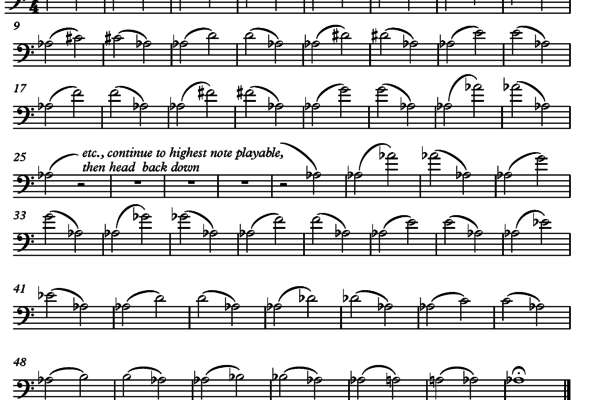
Single String Shifting Exercise
Single string shifting exercises are great for teaching us the geography of the fingerboard. Not to mention the help they provide in solidifying pitch accuracy and bow control. As a result, variations of the exercise given below have likely been in existence since the first human put first put bow to string. Edouard Nanny has a version at the end...

Bass Lesson: The Fast “Fade” Trick (All in the Fingers)
Here’s a quick lesson about a little trick for manually fading a note without using a volume control. It really is all in the fingers, and I bet it’ll come in handy.

Improving Vibrato Control: A Guide for Bassists
If the first step in acquiring control of our vibrato is to obtain a smooth motion that we can turn on or off at will, then the next step is to gain control over the speed and width of the vibrato. Being able to adjust the speed and width of a vibrato is indeed a valuable skill. Having this kind...

Lesson: Getting Funky with Trills on Bass
In our last lesson, we focused on using vibrato to your bass lines for better phrasing. This time around, we’re going to spend time working on trills on the electric bass. As you’ll hear in the video, playing a line without trills is not bad. But when you add those trills, the line has so much more life to it....

Finger Independence for Bassists: A Preparatory Double Trill Exercise
Complete independence of the left hand fingers is a laudable goal for every serious bassist, guitarist and string player. Below is a short beginning exercise designed to prepare us for playing double trills, (trills on two notes simultaneously). Strictly speaking, there are no double trills in the exercise below. However, it is a necessary step we must take if we...

Developing Timing and Feel: Rhythmic Studies for Bass Players
Q: My question is about timing. I realize that the choice of notes make a line hip, but the rhythm and the timing make the groove! How do you practice timing, Damian? A: Truer words have never been spoken! It’s all about the groove and time-feel (fancy words for “pocket”). Here are some goals for developing your timing and groove:...
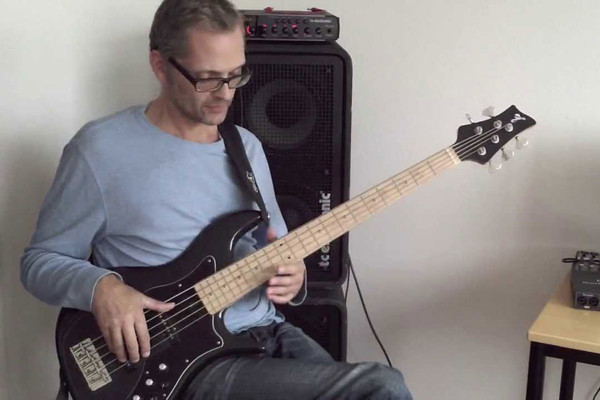
Bass Lesson: Using Vibrato in Your Bass Lines for Better Phrasing
Today we’re going to dive in to the topic of using vibrato in your playing in this beginner/intermediate-level bass lesson. Vibrato is key to expression and better phrasing, making it a vital tool of the trade. In the first example in the video below, we’ll play a rock groove in C. Our line is a simple one, with 4 bars...

Adjusting to the Upper Register on a 6-String Bass
Q: I have an issue with playing my 6-string bass so I searched the No Treble archives and found that you once wrote tips for making the shift from 4- to 6-string bass. I followed your advice there, but when playing a two octave scale past 12th fret (lets say F-Ionian), beginning on the B string, its hard (for me...

Thoughts on Improving Your Technique on Bass
There are voluminous technical exercises designed to make us better instrumentalists. Nearly all have benefit when executed properly. Unfortunately, many people focus solely on the musical result expected (e.g. How fast can I play that trill today?) when doing technical work. However, the best results are gained when we balance our focus between the musical result and our physical actions...

Perfecting the Double Thumb Technique
Q: I’m hoping you can help me perfect my double thumb technique. I have a few questions: How can I improve the sound of the upstroke so that it sounds more like a slap as opposed to a ghost note? When I try the technique on the A string I always strum the E string on the way up, how...

Shifting Exercises for Bass
Sometimes, just for fun, I like to work on the short shifting exercise below. It helps me measure my accuracy, ensure I am light during the shift, and that I am using minimum pressure with my fingers, all while keeping my shifting fluid. It’s short, fun and challenging. Keep the following things in mind: Play with the bow, this trains...